We will find a solution for your facility
We will help define the required specifications, choose the right equipment and agree on the best terms of cooperation.

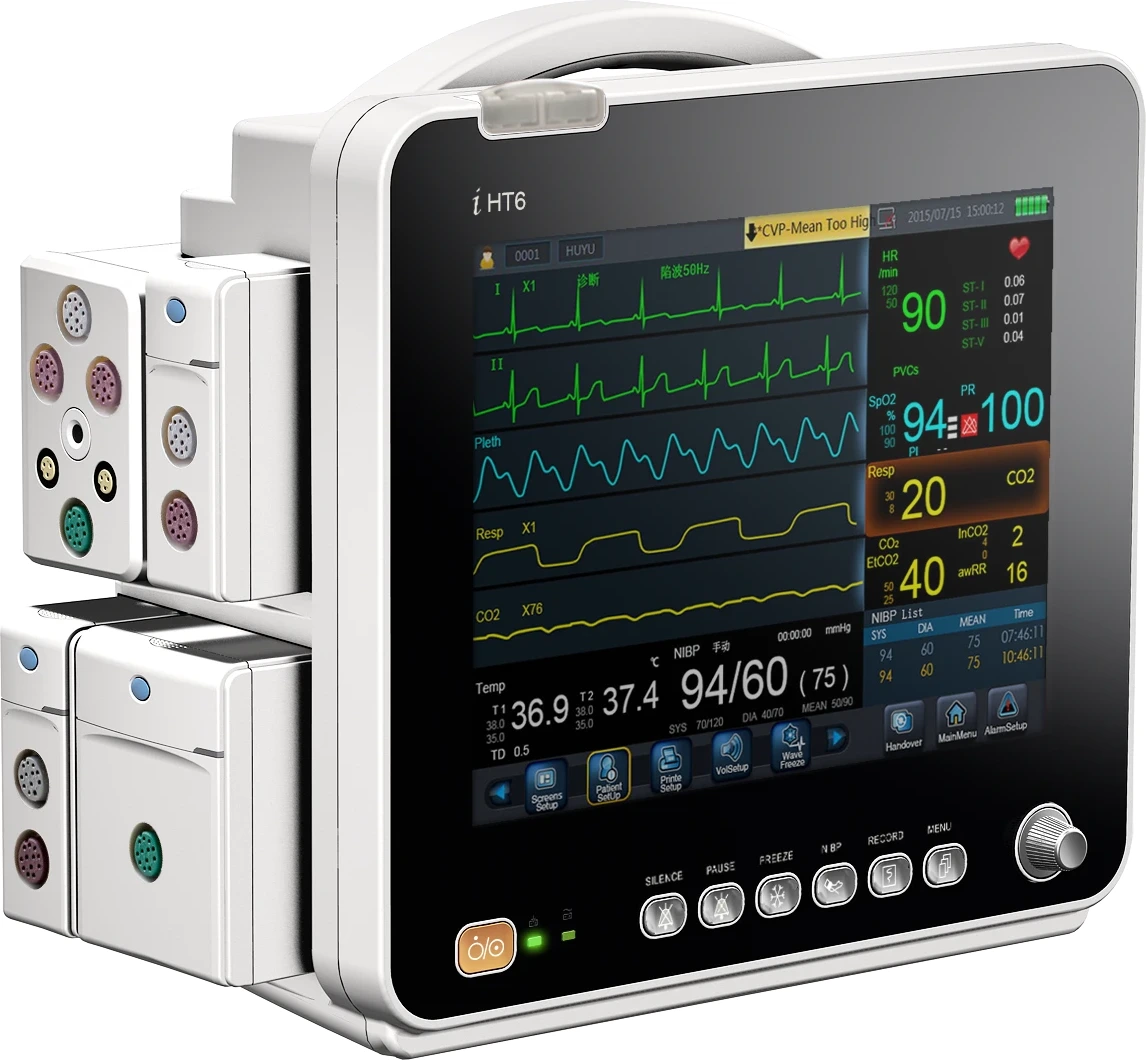

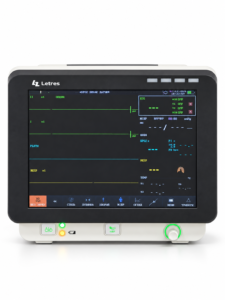
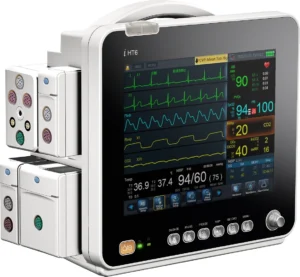
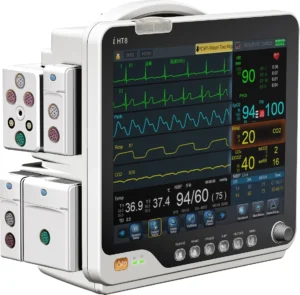
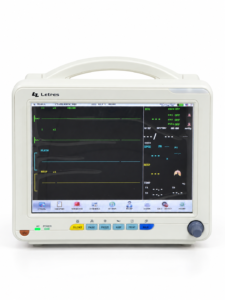
The expert-class patient monitor Letres iHT6 with a CSM depth-of-anaesthesia module analyses the EEG and calculates the CSI index for objective monitoring of the state of consciousness during anaesthesia. It displays CSI, BS%, EMG, SQI, the EEG waveform and trends, combining brain state monitoring with the patient’s other parameters on the single modular iHT6 platform.
Letres iHT6 configured with the CSM module is designed to monitor the patient’s state of consciousness during anaesthesia based on analysis of the electroencephalographic signal. The system complements standard physiological monitoring with information about the functional state of the brain, so the anaesthesiologist can assess changes in depth of anaesthesia not only by indirect haemodynamic signs.
The main calculated CSM value is CSI — Cerebral State Index — in the range from 0 to 100. Values approaching 100 correspond to a more active, awake state, while a decrease in CSI reflects suppression of EEG activity. Together with CSI, the system displays BS%, electromyographic activity EMG and the signal quality index SQI.
The physician sees more than calculated numbers. The iHT6 shows the EEG waveform in real time as well as CSI and BS trends, so you follow not a single value but its change throughout anaesthesia.
EEG-based monitoring of consciousness
CSM analyses the electrical activity of the brain and converts the EEG signal into a set of parameters convenient for continuous observation.
Unlike assessing anaesthesia only by heart rate, blood pressure or other indirect body responses, CSM adds a separate channel of information based directly on EEG activity.
The main value is CSI. Its scale covers 0 to 100 and lets you track the dynamics of consciousness during anaesthesia.
CSM is intended for adults and children. For neonates and for patients with neurological or psychotropic conditions, the manual recommends cautious use after clinical assessment.
Four parameters for CSM assessment
Real-time EEG
Letres iHT6 displays the raw EEG waveform together with the calculated CSM parameters.
EEG display amplitude is adjustable, and the sweep speed can be set to 6.25, 12.5 or 25 mm/s, so the signal view can be tailored to the user’s needs.
Combining the EEG waveform with CSI, BS%, EMG and SQI lets the physician see both the numerical assessment and the signal it is based on.
Depth-of-anaesthesia trends
A separate CSM area shows CSI and BS trends over time. This makes it possible to assess not only the current state but also the direction and nature of its change during anaesthesia.
Available viewing intervals:
For a selected moment, the corresponding CSI and BS values can be viewed.
The anaesthesiologist can thus compare the current value with its previous dynamics rather than assessing each value in isolation.
CSM alarm system
Alarm settings are provided for CSM parameters.
In the menu, alarms for CSI, BS and EMG can be configured separately, with the alarm level and upper and lower limits for each parameter.
This adapts monitoring to a specific clinical scenario and draws staff attention when parameters go beyond the set limits.
How CSM monitoring is performed
The signal is recorded with three electrodes placed on the patient’s head.
According to the manual, one electrode is placed in the centre of the forehead, the second on the left side of the forehead and the third on the left mastoid. Once the electrodes are connected to the CSM module, the monitor starts measuring automatically.
This integration makes CSM monitoring possible without a separate stand-alone depth-of-anaesthesia monitor — the data are shown directly on the iHT6 together with the patient’s other parameters.
What the anaesthesiologist sees
Available on one screen:
This lets you assess CSM in the context of the patient’s overall condition — together with haemodynamic, respiratory and other values, rather than as an isolated parameter.
Letres iHT6 with CSM Module — Key Features
What Your Facility Gets
Who the Letres iHT6 with CSM Module Is For
The configuration is intended primarily for anaesthesia monitoring of adults and children, when the state of consciousness must be monitored on the basis of EEG alongside standard parameters.
The system is suitable for operating rooms and other areas where anaesthesia is performed and CSM must work together with the patient’s main monitoring.
A Configuration for the Anaesthesia Workstation
CSM is one of the available expansion paths of the iHT6 platform. The configuration can be built to the required level of anaesthesia and haemodynamic monitoring.
Additional modules can be used together with CSM, including AG, EtCO₂, IBP, C.O. and other available options.
This allows a single iHT6 to be configured anywhere from standard monitoring to a comprehensive anaesthesia workstation.
Letres iHT6 with CSM for Your Facility
The Letres iHT6 with CSM module complements standard monitoring with EEG-based brain state monitoring — CSI, BS%, EMG, SQI, real-time EEG and trend analysis on a single modular platform.
Letres Company will help configure the iHT6 for the anaesthesia workstation, select the required additional modules and accessories, confirm the scope of delivery and prepare a technical and commercial offer.
| Main monitor unit | 1 pc. |
| ECG cable (5-lead) | 1 pc. |
| NIBP cuff and extension tube | 1 set |
| SpO₂ sensor | 1 pc. |
| Temperature sensor | 1 pc. |
| Power and ground cable | 1 set |
| Disposable ECG electrodes | 5 pcs. |
| Base | EtCO₂ sidestream | EtCO₂ mainstream | Masimo CO₂ | AG gases | BIS anesthesia | C.O. output | |
|---|---|---|---|---|---|---|---|
| What it measures | 6 parameters | CO₂ gas sampling | CO₂ in circuit | CO₂ Masimo | 5 gases + MAC | EEG brain activity | cardiac output |
| For whom | intensive care | all patients | intubated | ICU | anesthesia | anesthesia | hemodynamics |
| Price | 156 900 | 201 800 | 201 800 | 291 800 | 605 800 | 605 800 | 274 800 |
We will help define the required specifications, choose the right equipment and agree on the best terms of cooperation.